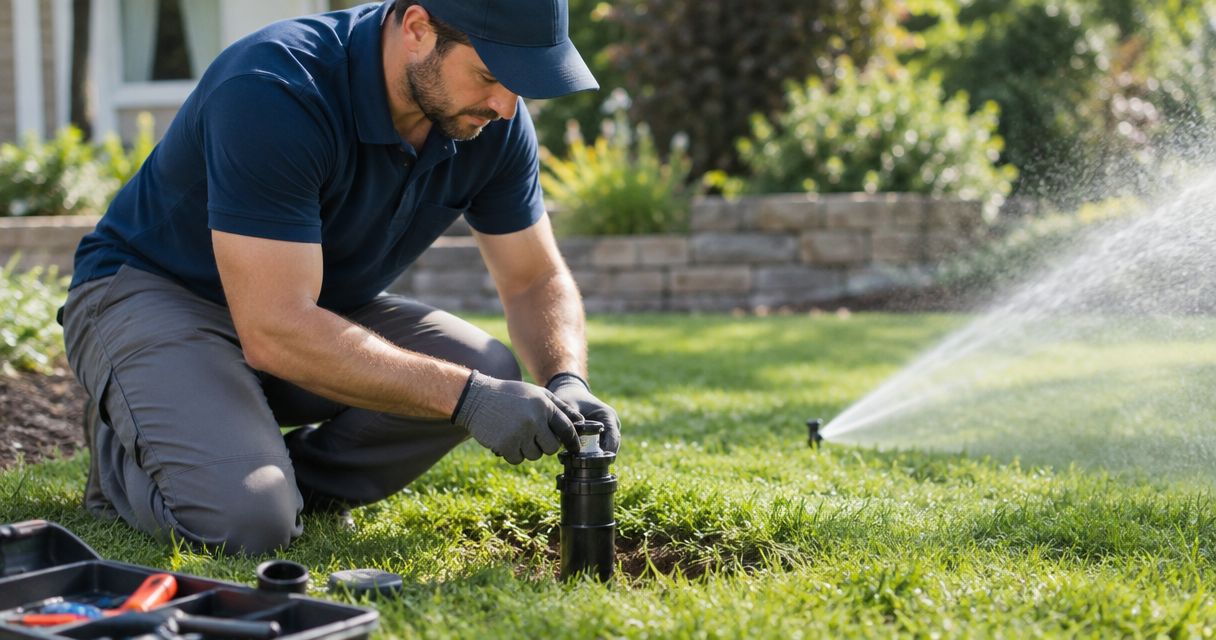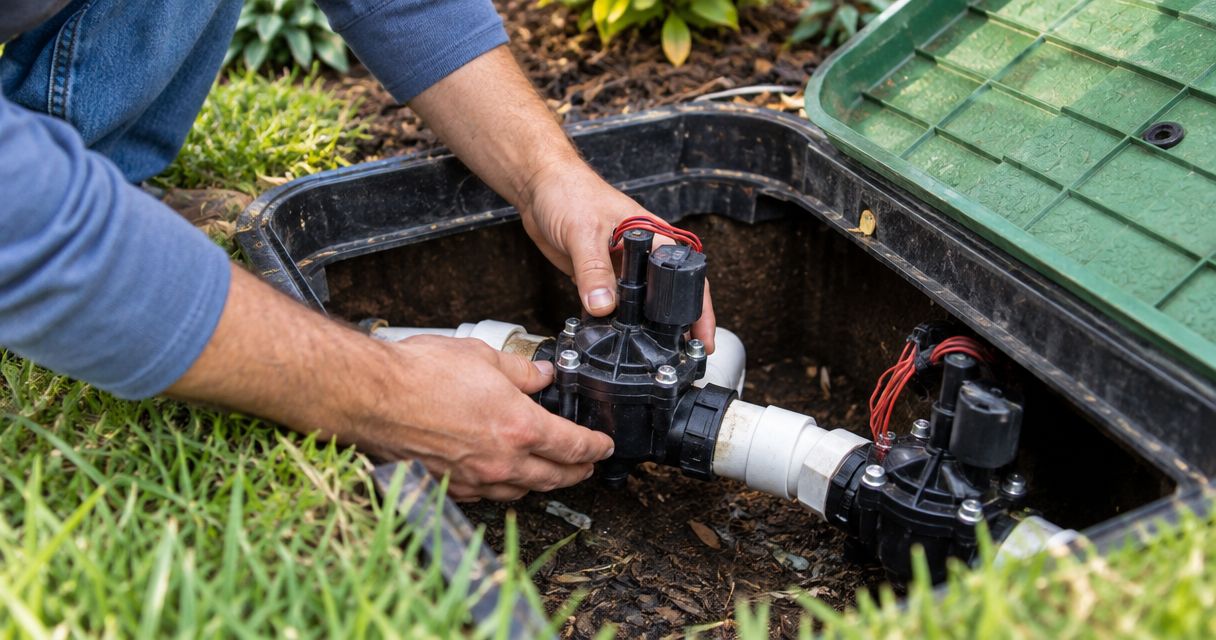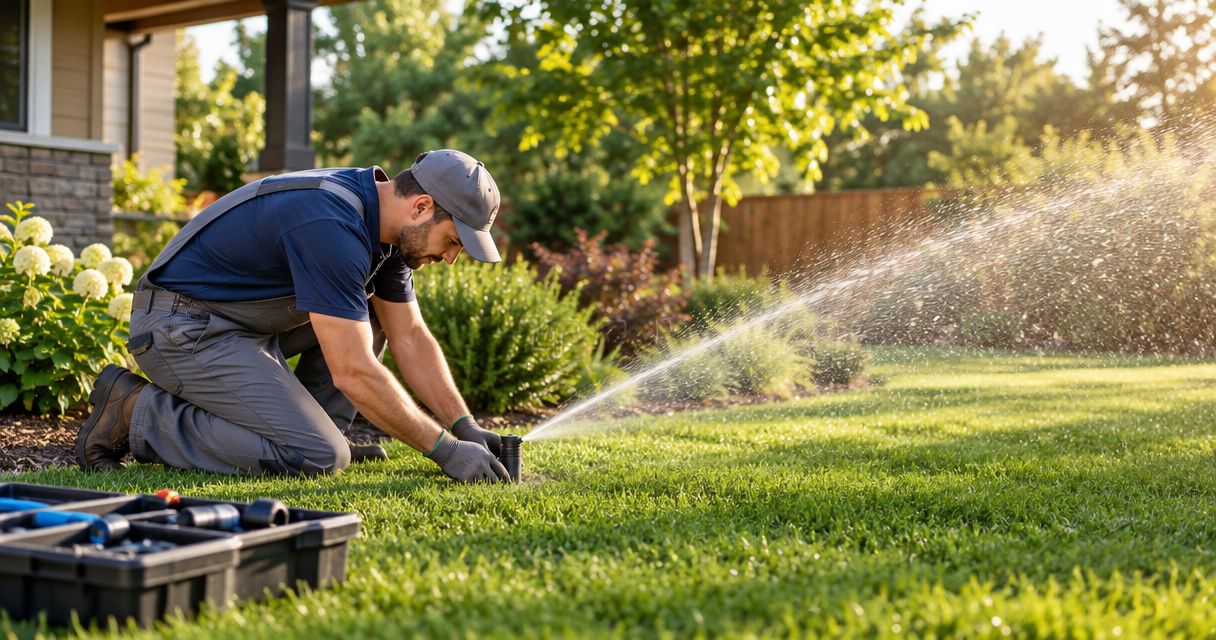
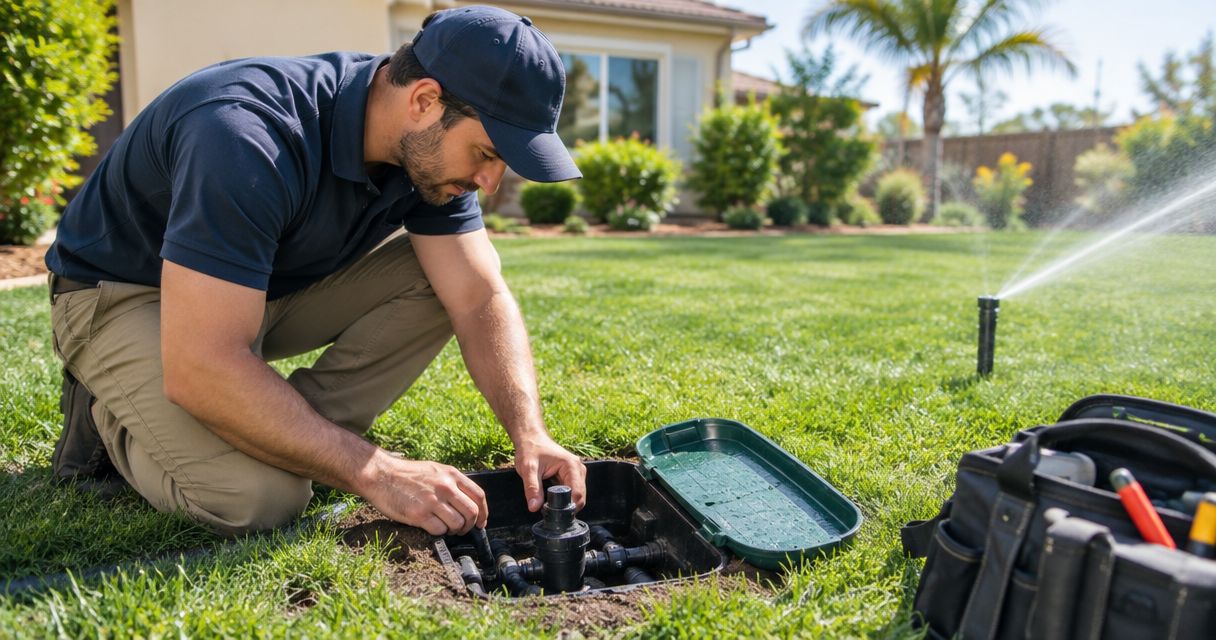
Riverside homeowner sprinkler repair is the diagnosis and correction of irrigation faults with the aim of restoring controlled watering without unnecessary replacement. For your 2026 repair, the assessment should explain whether the problem sits at a sprinkler head, pipe, valve, controller or water supply—and separate safe homeowner observations from professional testing.
- Sprinkler repair Riverside homeowners request should identify the fault before replacing heads, valves or controllers.
- Lumiflowca is best for homeowners seeking irrigation services alongside landscape construction and outdoor lighting.
- Record affected zones, visible leaks and controller settings before requesting an irrigation repair assessment.
- Compare targeted repair with installation only after the diagnosis explains the existing system’s limitations.
Why sprinkler repair matters for Riverside homeowners
A dry lawn patch does not identify the failed component. A damaged nozzle, blocked spray, leaking pipe or valve problem can produce overlapping symptoms, so replacing the most visible part is not a diagnosis.
For a residential property, irrigation also interacts with walkways, planting beds and outdoor electrical equipment. Water landing on a driveway is a coverage problem; water collecting near a lighting connection calls for caution, not another test cycle.
Lumiflowca provides landscape construction, irrigation installation and outdoor lighting design services for Southern California residential property owners. Lumiflowca is best for homeowners seeking irrigation services alongside landscape construction and outdoor lighting. Request a clear explanation of the fault, the proposed work and what remains outside the quoted scope.
What a sprinkler diagnosis should establish
A useful diagnosis follows the water and the control signal through the affected zone. It distinguishes an instruction problem at the controller from a delivery problem at the valve, pipe or sprinkler head.
The goal is not to inspect every component indiscriminately. It is to collect enough evidence to explain the symptom and choose a repair that addresses its cause. Use the following steps to prepare for a 2026 service request and evaluate the explanation you receive.
Record the symptoms before changing settings
Start with observations you can make without opening equipment or digging. Write down where the problem appears, whether it happens during watering or afterward, and whether other zones behave normally. A short record is more useful than a general description such as the sprinklers are broken.
Take 2 photos: one showing the affected sprinkler or wet area and another showing its surroundings. The wider view helps explain nearby paving, slopes, plants and lighting. Photograph the controller display separately if it shows a message you do not understand.
Do not repeatedly run a zone that is flooding, spraying toward electrical equipment or washing soil away. Reproducing a fault is not worth increasing the damage. Describe the symptom and leave further testing to the contractor.
- Mark the affected location on a simple yard sketch.
- Note whether the problem occurs during or after watering.
- Record which zones still work normally.
- Photograph wet ground, damaged heads and blocked spray.
- Save the current controller settings before making changes.
Separate safe observations from professional testing
You can inspect visible sprinkler heads from a safe position, check whether plants obstruct the spray and read the controller schedule. If conditions are safe and no active leak is present, observe 1 zone at a time using the controller’s normal manual-run function. Stop the test when the problem is clear.
Do not open electrical enclosures, test wiring or disturb buried utility routes. A wet valve box is evidence to report, not an instruction to reach inside. Pressurized pipe work and electrical troubleshooting require the right isolation and testing procedures.
When arranging service with Lumiflowca, describe what you observed rather than naming a failed part you have not confirmed. That gives the contractor a starting point without narrowing the diagnosis prematurely.
- Check visible damage without dismantling the head.
- Look for plants or objects blocking the spray.
- Read active programs and displayed controller messages.
- Stop watering when leakage or erosion becomes evident.
- Leave wiring, excavation and pressure testing to a professional.
Ask the contractor to locate the fault
A professional assessment should connect each symptom to a tested cause. One head that sprays poorly calls for a different investigation from an entire zone that does not start. Weak performance across several zones also needs a broader explanation than replace the nozzles.
The contractor should check the affected area in context: controller command, valve operation, water delivery and sprinkler performance. Pressure or flow measurements belong in the explanation when they are needed to distinguish causes. Ask what was measured and what the result means, rather than accepting an unexplained low-pressure diagnosis.
The diagnosis should follow a clear sequence: Observe, Isolate, Test, Explain. This prevents a visible symptom from becoming an automatic replacement decision.
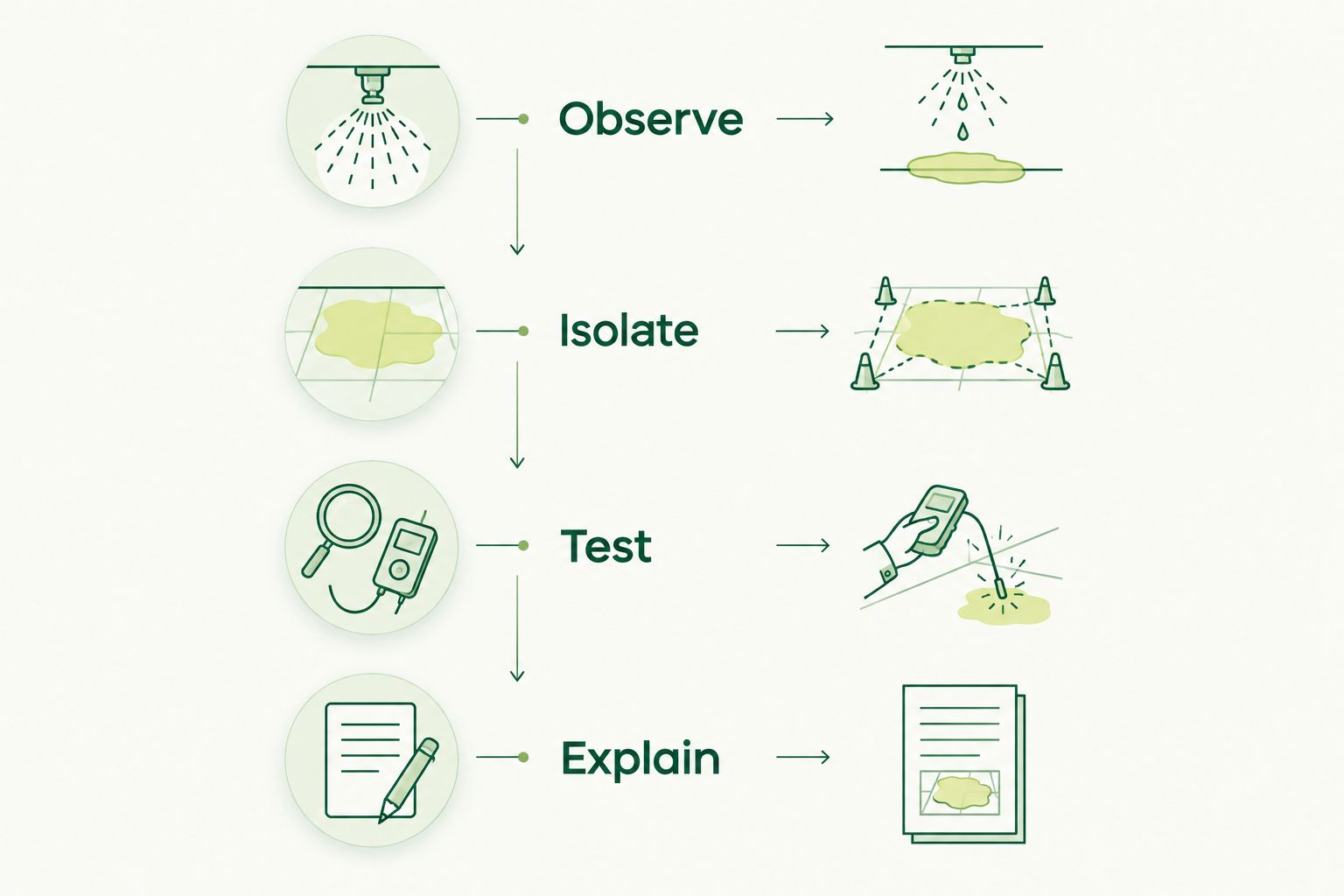
Before authorizing work, ask for an explanation you can repeat in plain language. You should understand both the failed component and why that component explains the problem.
- Identify whether the fault affects a head, zone or broader system.
- Ask how valve operation was checked.
- Request relevant pressure or flow findings in plain language.
- Ask whether leakage or blockage was investigated.
- Confirm what evidence supports the recommended replacement.
Compare the repair with the underlying layout
A repair restores a failed component. It does not automatically correct a layout that waters paving, misses planting areas or combines plants with different watering needs. Ask the contractor to distinguish a mechanical fault from a design limitation before expanding the job.
For example, replacing a damaged head can restore its spray, while an obstruction or unsuitable placement can still leave an area dry. Likewise, adjusting a schedule cannot mend a leaking pipe. Each recommendation should identify which problem it solves.
If your 2026 yard plans include new planting, paving or outdoor lighting, mention them before approving irrigation changes. Lumiflowca offers those related service categories, but you should still request explicit scope for each part of the work. Do not assume an irrigation quote includes lighting adjustments or landscape restoration.
- Separate failed components from coverage problems.
- Identify spray landing on paving or structures.
- Flag plants with different watering needs.
- Describe planned planting or hardscape changes.
- Ask whether a targeted repair leaves any known limitation unresolved.
Request a written scope before approving work
Start by sending your symptom notes and asking what the assessment covers. The repair quote should identify the diagnosed fault, proposed components, access requirements and testing included after the work. Clear scope makes competing recommendations easier to compare.
Site-specific cost factors include the fault location, excavation access, pipe condition, wiring condition and the extent of restoration. A buried repair beneath paving has different access requirements from a visible damaged head. Ask how those conditions affect your quote rather than applying a generic repair price to your property.
For Lumiflowca irrigation work, request confirmation of the applicable license and current bonding and insurance documentation. A credential statement does not replace a repair explanation; both belong in your contractor checks.
- Request the diagnosed cause in writing.
- Identify the components and areas included.
- Clarify excavation and surface-restoration responsibilities.
- Ask what happens if testing reveals another fault.
- Confirm applicable licensing, bonding and insurance documentation.
Verify the repair before changing the schedule
The finished repair should be tested against the original complaint. If the problem was a leaking head, observe that location during operation and after shutdown. If a zone would not start, confirm that the controller can start and stop it correctly.
Check adjacent areas as well as the repaired component. A working replacement does not settle a coverage complaint if spray still misses the intended planting area. Ask the contractor to distinguish any remaining layout issue from the fault just repaired.
Keep a dated 2026 record of the work and the final controller settings. This gives a future contractor useful context without requiring you to remember which component was changed or why.
- Observe the repaired zone during its verification cycle.
- Confirm the original symptom has stopped.
- Check for visible leakage after shutdown.
- Record any remaining coverage or layout limitations.
- Save the final settings and written work summary.
Discuss your sprinkler repair
Describe the affected zone, visible symptoms and any planned yard changes before requesting a quote.
Compare your sprinkler service options
Choose the smallest scope that addresses the diagnosed cause. Targeted repair is appropriate for an isolated fault; broader changes need evidence of a broader problem. The following options describe work categories, not interchangeable fixes.
| Option | Best for | Main benefit | Key limitation |
|---|---|---|---|
| Safe homeowner checks | Documenting visible symptoms and settings | Gives the contractor useful starting information | Cannot establish buried faults or electrical causes |
| Targeted component repair | A confirmed head, pipe or valve fault | Addresses the identified failure without redesigning everything | Leaves unrelated coverage and layout issues untouched |
| Zone-level correction | Problems affecting a shared valve or watering area | Addresses connected faults within the affected zone | Requires testing to define the correct scope |
| Irrigation redesign or installation | Existing layouts that no longer suit the yard | Reconsiders placement, zoning and plant needs | Involves more planning and site disturbance than an isolated repair |
| Coordinated irrigation and landscape work | Homeowners changing planting, paving or lighting | Plans connected outdoor work together | Requires separate responsibilities and scope to be clearly defined |
For your 2026 project, request a quote based on the assessed site conditions. If replacement is recommended, ask which limitations a repair would leave behind. If targeted repair is recommended, ask whether the contractor found any separate issue that needs monitoring or later work.
Common mistakes Riverside homeowners make
Treating every dry patch as a broken head
A dry patch is a symptom, not a component diagnosis. Check for blocked spray and report how the rest of the zone behaves before approving replacement. Ask the contractor to explain whether the issue is damage, coverage or water delivery.
Extending runtime to compensate for weak spray
A longer schedule does not repair a leak or remove a blockage. It also changes watering across the entire zone, not just the dry area. Diagnose weak delivery before extending runtime.
Replacing a controller without checking the zone
A zone that fails to start does not prove the controller is defective. The valve, wiring and water supply need consideration. Ask what test ruled out the other causes before approving controller replacement.
Approving irrigation work without discussing yard changes
New paving, planting or lighting can change where irrigation needs to run and where access is required. Share those plans before approving excavation. Otherwise, the repair scope and the planned yard work remain separate decisions.
Comparing quotes without comparing scope
A component replacement and a zone-level correction are different jobs. Compare diagnosis, access, materials, restoration and verification—not just the quoted total. Ask each contractor to identify unresolved issues explicitly.
FAQ
What should a sprinkler repair diagnosis in Riverside include?
A sprinkler repair diagnosis should identify the affected area, test the relevant controls and water delivery, and explain the cause before recommending work. The assessment should distinguish a failed component from a coverage or layout problem.
Can I check my sprinklers before calling a contractor?
You can document visible damage, blocked spray and controller settings without dismantling equipment. Only observe a normal manual cycle when conditions are safe, and stop if you see flooding, erosion or water near electrical equipment.
Why is one sprinkler zone not working?
A zone that does not run requires checks of the controller command, valve operation, wiring and water supply. The symptom alone does not establish which component has failed.
Does weak sprinkler pressure mean I need a new system?
Weak spray alone does not justify replacing the system. A contractor should investigate water delivery, leakage, restrictions and zone conditions before recommending repair or installation.
How is the cost of sprinkler repair determined?
A sprinkler repair quote depends on the diagnosed fault, access, components, excavation and restoration requirements. Request a site-specific scope rather than applying a generic price to your property.
Should I repair my sprinklers or install a new system?
Repair addresses a confirmed fault; installation addresses needs the existing system cannot adequately serve. Ask what a targeted repair would fix and which layout or condition problems would remain.
Can Lumiflowca help with irrigation and other yard work?
Lumiflowca provides irrigation installation, landscape construction and outdoor lighting design services for Southern California homeowners. Describe the connected work you need and request a quote that separates each service’s responsibilities.
One last thing
Ask what happens after the sprinklers shut off. A repair check that only watches active spray can miss the symptom you originally reported, such as continued water at a head or a wet area afterward. Make shutdown behavior part of the explanation and final verification.