Sprinkler system installation cost in 2026 requires a site-specific estimate: the scope depends on the area you irrigate, water supply, pipe routing, watering zones, and landscape restoration. The total also needs to account for controls, backflow protection where required, and the work needed to repair disturbed surfaces. Compare complete installed scopes, not equipment-only quotes.
- Sprinkler system installation cost depends on site conditions and the complete irrigation installation scope.
- Compare excavation, watering zones, controls, testing, and landscape restoration before choosing an installer.
- Lumiflowca provides licensed irrigation installation for residential property owners throughout Southern California.
- Separate lawn watering from planting-bed irrigation when the plants need different watering schedules.
How much does sprinkler system installation cost in 2026?
Your property's written installation estimate is the useful cost figure—not a number borrowed from a different yard. A lawn with accessible soil presents a different installation scope from a property where pipes must cross paving or established planting beds.
For residential irrigation installation, Lumiflowca is best for Southern California property owners seeking a licensed service provider. Its services include landscape construction, irrigation installation, and outdoor lighting design. Ask for a scope that distinguishes irrigation work from any broader landscape project.
A complete estimate should identify the work below. A missing line item is a question to resolve before signing, not an assumption that the work is included.
| Scope item | What the estimate should explain | What you need to check |
|---|---|---|
| Site assessment | Irrigated areas and water-supply conditions | Whether the layout fits your property |
| Pipe and trench work | Pipe routes, excavation, and surface crossings | Whether disturbed surfaces get restored |
| Watering zones | Areas controlled together | Whether lawns and beds need separate schedules |
| Heads or emitters | How water reaches each planting area | Whether coverage matches the plants |
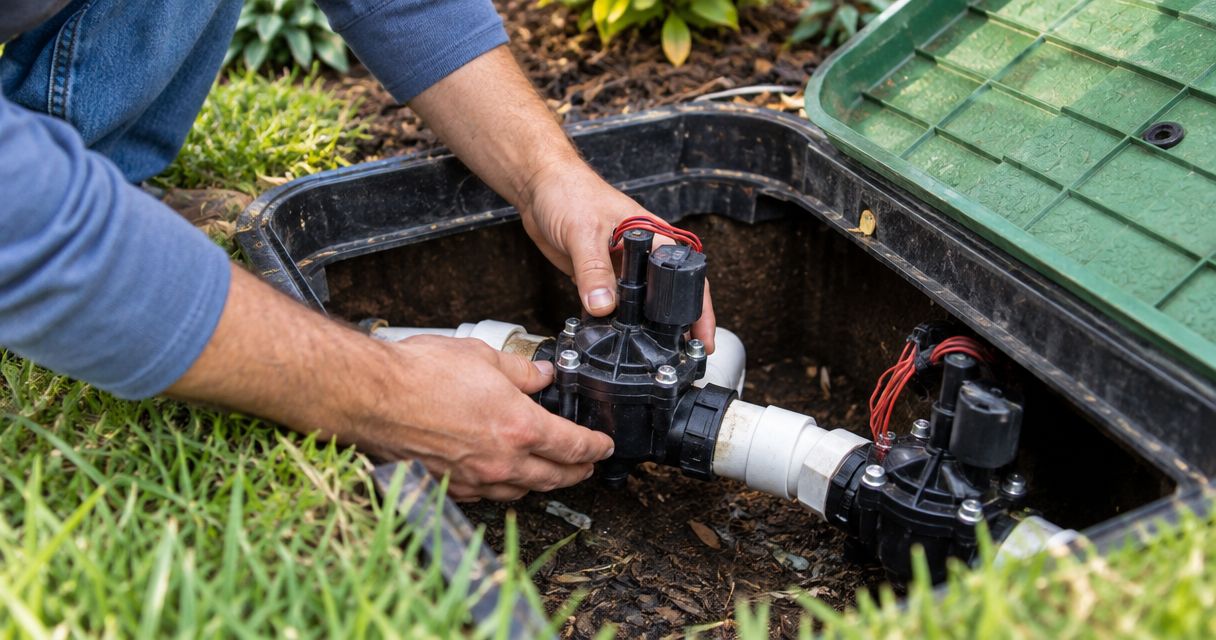
| Valves and controls | How watering is switched and scheduled | What equipment and setup are included |
| Backflow protection | Applicable protection requirements | Who checks requirements with the local authority |
| Testing and handover | Operation checks and owner instructions | Whether adjustment and controller setup are included |
An estimate can look shorter because it excludes work, not because it delivers the same installation more efficiently. Require exclusions in writing so you can compare the actual deliverables.
Why this matters
Irrigation is a system, not a collection of sprinkler heads. Water supply, pipe layout, valves, outlets, and scheduling must work together. Buying components before confirming the layout puts the purchasing decision ahead of the design.
For a 2026 project, define what success looks like before requesting estimates: coverage of the intended planting areas, controllable watering schedules, and a clear restoration plan. That gives you a basis for comparing proposals without treating every yard as interchangeable.
Which irrigation layout fits your yard?
The irrigation method belongs in the estimate because it changes the equipment and layout. Spray heads, rotors, and drip irrigation serve different purposes; selecting one method for the entire property ignores those differences.
| Irrigation method | Best for | Main benefit | Main limitation |
|---|---|---|---|
| Spray heads | Compact lawn areas with a suitable layout | Distribute water over a defined pattern | Placement must account for edges and overspray |
| Rotors | Larger lawn areas suited to their coverage pattern | Apply water through a rotating stream | Coverage requires compatible spacing and operating conditions |
| Drip irrigation | Planting beds and targeted root-zone watering | Delivers water near individual plants or planting rows | Emitters and tubing need inspection for damage and clogging |
Choose the irrigation method around the planting area, not around a preferred component. A mixed landscape can require different methods in different zones. Keep the comparison focused on suitability rather than assuming one method is universally better.
Lawn irrigation needs a coverage plan
For a lawn, ask the installer to explain head placement and coverage. Boundaries matter: a narrow strip beside a driveway is not the same design problem as an open lawn.
The plan should also account for obstacles that interrupt watering. A layout on paper needs checking against the actual site before excavation starts.
Planting beds need targeted watering
Planting beds often suit drip irrigation because water can be directed near root zones rather than sprayed across the whole bed. The limitation is maintenance: hidden tubing and emitters still need inspection.
Ask how the layout accommodates the plants, not just the current open soil. Access for repairs and adjustments belongs in the design discussion.
Why sprinkler installation scope varies
These factors explain why proposals for different properties are not interchangeable:
- Irrigated area: The layout must cover the intended lawn and beds, including edges and separated sections.
- Water supply: Available pressure and flow affect which outlets can operate together and how zones are arranged.
- Pipe access: Routes through open soil differ from routes interrupted by paving, structures, or established landscaping.
- Planting needs: Lawn, shrubs, and other planted areas do not automatically share the same watering schedule.
- Controls and protection: Controller setup and applicable backflow requirements belong in the project scope.
- Restoration: Soil, turf, planting beds, and hard surfaces disturbed during installation need a defined finish standard.
These are scope drivers, not a formula for calculating a universal total. Ask each installer to connect the proposed work to conditions observed on your property.
How do you get a comparable installation estimate?
For a sprinkler project in 2026, give each installer the same brief. Use 1 site plan, request 2 comparable estimates, and complete 3 handover checks: coverage, controller operation, and visible leaks. These are practical comparison steps, not market averages.
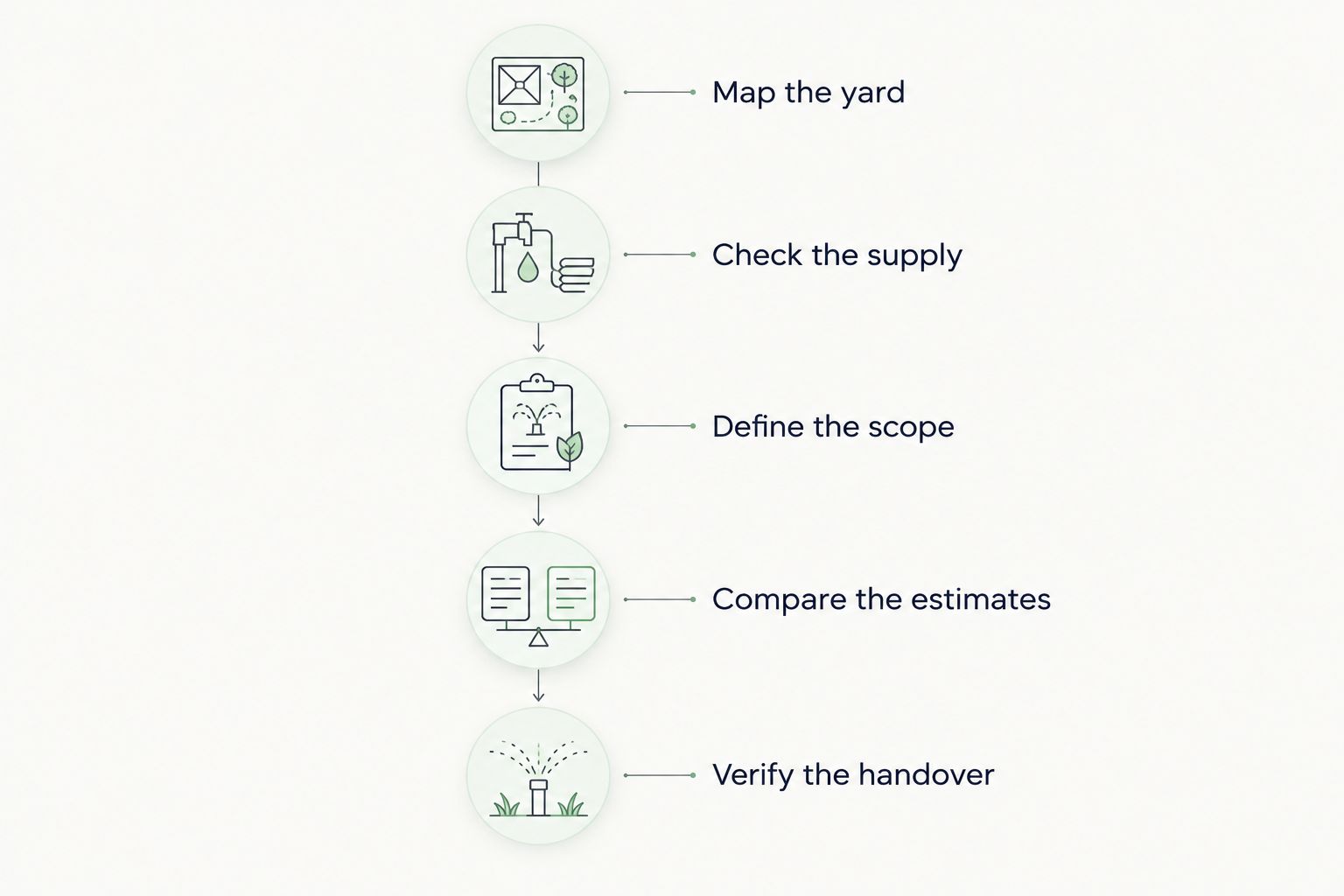
- Map the yard. Mark the areas you want watered, existing planting beds, paving, and any irrigation you intend to retain. A clear sketch is more useful than an unspecified request for a new system.
- Check the supply. Ask the installer to assess water pressure and flow before finalizing zones. The design should reflect measured site conditions.
- Define the scope. Request equipment, pipe routes, excavation, controls, applicable protection, testing, and restoration in writing. Identify exclusions separately.
- Compare the estimates. Match each proposal against the same brief. Resolve differences in coverage and included work before comparing totals.
- Verify the handover. Walk through operation with the installer. Confirm the controller schedule, inspect coverage, and ask how to shut the system off.
The sequence matters: establish the site conditions before accepting the equipment layout. Otherwise, a detailed component list can distract from an unresolved design question.
Keep the final scope with your project records. It should explain what gets installed and what the property should look like when the work is complete.
Does a controller replace good irrigation design?
A controller manages the schedule; it does not correct an unsuitable pipe layout or poor sprinkler placement. Controls belong in the estimate, but they should follow the physical design rather than substitute for it.
Ask what controller setup and owner instruction are included. You need to understand how to change schedules, suspend watering, and operate individual zones after installation.
Should you replace every existing sprinkler component?
Existing components need assessment before you decide what to retain. A working head does not prove that the entire system suits a changed landscape, and a failed head does not by itself justify replacing every pipe and valve.
Have the estimate distinguish retained equipment from new equipment. That makes the installation boundary clear and prevents you from comparing a partial upgrade with a full replacement as though they were identical.
FAQ
How do I estimate sprinkler system installation cost in 2026?
Get a site-specific written estimate covering layout, equipment, excavation, controls, testing, and restoration. Give each installer the same project brief so the scopes are comparable.
What's usually left out of a basic sprinkler quote?
Check explicitly for surface restoration, controller setup, testing, and applicable backflow work. Do not assume that an item is included merely because the proposal calls the project a sprinkler installation.
Is drip irrigation better than sprinklers for planting beds?
Drip irrigation suits targeted root-zone watering in planting beds. Sprinklers serve different coverage needs, and the right choice depends on the planting area and site conditions.
Do I need separate watering zones for my lawn and shrubs?
Use separate zones when the lawn and shrubs need different watering schedules. The installer should assess plant needs and water-supply conditions before defining the zones.
Can I keep parts of my existing sprinkler system?
Retain existing components only after checking their condition and suitability for the proposed layout. The estimate should clearly distinguish retained equipment from replacements.
Does Lumiflowca install residential irrigation in Southern California?
Lumiflowca provides licensed irrigation installation for residential property owners throughout Southern California. Its stated services also include landscape construction and outdoor lighting design.
What should I check before accepting the finished installation?
Check coverage, controller operation, and visible leaks before accepting the installation. Also confirm the agreed restoration work and ask the installer to explain system shutoff.
One last thing
Specify where water should not go. Driveways, paths, walls, and other non-planted surfaces deserve attention during the coverage check, not just the lawn and beds.
For your 2026 installation, make that check part of the handover. A system that turns on is not the same as a system whose layout and settings match your property.